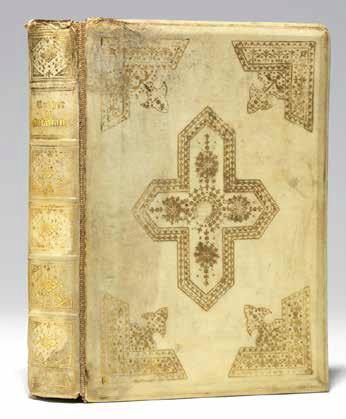
"Se não te agradar o estylo,e o methodo, que sigo, terás paciência, porque não posso saber o teu génio, mas se lendo encontrares alguns erros, (como pode suceder, que encontres) ficar-tehey em grande obrigação se delles me advertires, para que emendando-os fique o teu gosto mais satisfeito"
Bento Morganti - Nummismologia. Lisboa, 1737. no Prólogo «A Quem Ler»

segunda-feira, 7 de dezembro de 2015

Livraria Castro e Silva no Salón del Libro Antiguo – Madrid 2015


XVIII Salón del Libro Antiguo - Madrid 2015

A Livraria Castro e Silva, Rua do Norte, 44 - 1º andar 1200-286 Lisboa | Portugal, elaborou um Catálogo de Livros Raros a apresentar no XVIII Salón del Libro Antiguo - Madrid organizado pelo Gremio Madrileño de Libreros de Viejo (1) de 10 a 13 de Dezembro de 2015, no Hotel Miguel Angel (Calle de Miguel Ángel, 29).


 “¿Libros antiguos? ¿libros de ayer? ¿de hoy? ¿de mañana?... Libros de siempre que no envejecen, conservados por el bálsamo del tiempo o por el amor de un loco coleccionista, libros que con el paso del tiempo envejecen. Es el tiempo lo que atraviesan, suavemente, sin verse afectados por él, se adaptan a su aire, adquieren pátina, se ennoblecen, se transmiten de bibliófilo a bibliófilo. Se vuelven centenarios como los sabios. Siempre eternos.
Como en todas las anteriores ocasiones, esperamos que los libros que con tanto cuidado hemos elegido para este Decimosexto Salón del Libro Antiguo, cumplan las expectativas de los aficionados que nos visiten, pues cada uno de ellos estará esperando a que su nuevo dueño los encuentre.”
Guillermo Blázquez Barbero
Presidente del Gremio Madrileño de Libreros de Viejo


Como se disse a Livraria Castro e Silva preparou um catálogo especial de que aqui se dá notícia:


É deste que vamos apresentar alguns exemplos:

First European work with Japanese characteres


1. ACOSTA, Manuel de & MAFFEI, Giovanni Pietro. RERUM A SOCIETATE IESU IN ORIENTE GESTARUM VOLUMEN. Continens Historiam incundam lectu omnibus Christianis, praesertim ijs, quibus vera Religio est cordi. Colonia, Geruinum Calenium, & haeredes Iohannis Quentel, 1574. In 8.º (17x11,5 cm). [xxxi], 472 pags.

Binding: contemporary full calf artistically finished and gilt with rolled tools at boards. Edges of paper cuts were originally blind tooled and gilt.

Illustrated with a vignette in title page (portrait of Jesus); and several charming woodcut Japanese characters - from page 451 (alias 453) to page 457 - underlined by their Latin translations, which were previously printed in Portugal in Cartas de Japão do anno de 1557, Coimbra, António de Mariz, 1570 (vide D. Manuel, 1935, Tomo III, pag 10).
Copy with an ownership title (a drawing at title page depicting a Rosary); and several other ownership titles at colophon. Ex-libris from Biblioteca Rosales Bernate.

The text of the first part is based on a manuscript História das Missões do Oriente até o anno de 1568 written by a Portuguese Jesuit, Manuel da Costa. Da Costa was a Jesuit missionary and bibliographer, who taught at Coimbra where most of the Jesuit letters were available in uncensored form.


The manuscript was sent to Rome, translated into Latin, and was then given to the young novice Giovanni Pietro Maffei (1533-1603) to prepare it for publication. Maffei added a considerable amount of text to Acosta’s work, entitled De Japonicis rebus epistolarum.

This part contains abridged Latin translations of letters sent from the Jesuits working in Japan until the year 1564. In his introduction Maffei congratulates Da Costa on his effort in summarizing the contents of the letters together in a short commentary.

Later Maffei wrote the very successful work Historiarum Indicarum libri XVI, much praised for its excellent treatment of Japan.

Sommervogel II 1505. BM [STC GER] 441.CCBE s. XVI C 3446.5

Luxurious illuminated book of hours printed on vellum. 
Judging from the binding, once belonged to Maria di Medici


6. BOOK OF HOURS. HORAE DIUINE VIRGINIS MARIE SECUNDUM VSUM ROMANUM cum aliis multis folio sequenti notatis: vna cum figuris apocalipsis & destructio Hierusalem & multis figuris Biblie insertis: Opera Germani Hardouyn. [Paris, circa 1521?] In 8. º (11.5x17 cm) 96 folios.

Binding: Full red morocco from the 17th century; with artistic gold furnitures at corner edges; embossed in gold, lacking some elements such as the central super-libris medallions.


Illustrated with 20 full page illuminated engravings and 12 small illuminated engravings, hundreds of woodcut illuminated capital letters. Frontispiece illustrated with an engraving with the mark of the printer Gille Hardouin, having on the reverse of title page an illuminated engraving of the anatomical man surrounded by the four elements. All text folios feature marginal engravings with biblical scenes.

Copy with handwritten note in French on the first endpaper: “À en juger par la reliure, ce livre d’heures doit avoir appartenu à Henry IV ou à Maria de Medicis. Les figures des angels sont en or“ (Judging from the binding, this book of hours must have belonged to Henry IV or Maria de Medici. The figures of angels are in gold).

Rare Illuminated Latin Book of Hours as the use of Rome. Verso of title page in French language. Printing on vellum [parchment] using black italic characters and with 29 lines per page.

Bohatta 1045 - Bibliographie der Livres d’Heures, Wien 1924. Cat. Heredia 94.

The conquest of Mexico in Hernan Cortez´s own words,
with heraldic super-libris from the Marquis of Caracena


12. CORTEZ, Hernan. LA PRECLARA NARRATIONE DI FERDINANDO CORTESE DELLA NUOVA ESPAGNA. del Mare Oceano, al Sacratissimo, & Inuictissimo Carlo di Romani Imperatore sempre Augusto Re Dhispagna, cio che siegue, nellãno del Signore. M. D. XX. Venice, Bernardino de Viano de Lexona Vercellese. 1524. In 4º (20x15 cm). 71 unnumbered folios. [Lacks two preliminary leaves] and eventually one map, actually two separate maps printed in one sheet, one of Tenochtitlan (Mexico City) and one of the Gulf Coast of Mexico and the southeastern part of the present-day United States.

Binding: 17th Century full calf with heraldic super-libris from the Marquis of Caracena (1608-1668) a Spanish general and political figure.


About the eventually missing map: Though sometimes the map appears in the Venetian edition, there is much doubt that this edition originally had it, because all known maps are from the Nuremberg’s edition. The map (attributed to Albrecht Dürer) was made for the Nuremberg´s edition on this same year of 1524.

«Salvá 63191 [iv pp.141-142] Lacks two preliminary leaves. First Italian edition of the 2nd and 3rd letters. No maps (plans folding of Mexico) but there is doubt of this.»

Sabin 16951: Sm 4to. 73 l., not numbered, large Plan and Map [both missing], folding, often wanting, sigs. in 4s, reverse R iv blank, last has blank retro, device of elephant bearing cross [missing], and castle with shield bearing initials Z.B.P. on verso [missing]. Contains second letter only, translated by Liburnius from the Latin of Savorgnanus as published the same year […]»

Palau 63191 «4º, letra romana, 4 h. 69 fols. 1 plano de Méjico [missing] 65 libras Quarich, 1896. 1250 francos suizos, 1925.»

War between Holland and England, and final loss of New Netherland, nowadays New York, taken by the duke of York, and confirmed as a British possession


33. KORT EN BONDIGH VERHAEL VAN'T GEENE IN DEN OORLOGH Trusschen den Koningh van Engelant &c. de H: M: Heeren Staten der vrye Vereenigde Nederlanden, en den Bischop van Munster is voorgevallen. Beginnende in den Jare 1664., en eyndigende met het fluyten van de Vrede tot Breda, in’t Jaer 1667. Daer in the [etc]. Met een korte Inleydingh, vervattende de ballinghschap en herstelling van den tegenwoordigen Koningh van Engelandt. Met verschepde kopers Figuren verciert. t’ Amsterdam, voor Marcus Willemsz. Doornick, op den Vygendem, in’t Kantoor Incktvat. Anno 1667. Together with: Articulen van Vrede Ende Verbondt tusschen. […] IN’S GRAVENHAGE, By Hillebrant van Wouw […] Anno 1667. In 4º (18x14 cm). 255, [xxiv] pags.

Binding: late 19th Century half calf.

Illustrated with many fine copperplates, among them a half-page engraving on title-page.

Original Dutch edition. Others editions were published the same year in Amsterdam by Jacob Benjamin and in Utrecht by Gerrit Nieuwenhuysen.

This work is a full chronological account of the war between the King of England and Their Majesties the States general of the free United Netherlands, beginning in the year 1664 and ending with the signing of the Treaty of Breda in 1667. New Amsterdam nowadays New York was taken by the Duke of York prior to the formal declaration of war, and was later confirmed as a British possession, along with the entire colony of New Netherlands. A complete text of the treaty is appended. May be considered the most complete and most authentic contemporary account of the war between Holland and England.

Knuttel 9531 (Utrecht 1667); Knuttel 9518; Asher 354; Muller, America, 1103; Church 599; European Americana III, 667/90. Sabin 38246.

Reference book to doctors and pharmacists including new exotic plants introduced by the discoveries from the new world and the east, organized in an herbal collection


41. LOBEL, Mathia de. & Petro Pena. [HERBARIO: IN STIRPIUM ADVERSARIA NOVA]. Plantarum Historiae Physicae, tam indegenarum & Britanniae inquilinarum, quam exoticarum scriptoris. Londini. 1605. Thomae Purfootij. In folio (de 29x18 cm). [viii], 156, [xv], 549 pags.

Binding: contemporary full calf (renewed and fixed at spine with a new label); and contemporary blind tooled in frames at the folders. Illustrated with drawings of the anatomy of plants arranged as in an herbal collection and additional prints interspersed in hors-text.

A reference work of the medical doctors and pharmacists of King James I of England, containing a collection of plants native to Britain, and with new plants and species (new “stirpum”) introduced by the Discoveries of the New World and the East, including cacti and other exotic plants beautifully represented with its fruits and roots.

Henrey 232; Hunt 183; Nissen BBI 1502; Wellcome 3831.

One of the great books in the history of science, with 12 folding plates containing the graphics from the study of the light


51. NEWTON, Isaac. OPTICE. SIVE DE REFLEXIONIBUS, REFRACTIONIBUS, INFLEXIONIBUS & COLORIBUS LUCIS, LIBRI TRES. Latine reddidit Samuel Clarke. S. T. P. Editio Secunda, auctior. LONDINI. Impensis Gul. & Joh. Innys Regiae Societatis Typographorum ad Insignia Principis in Areâ Occidentali D. Pauli. MDCCIXI [1719]. In 4º (19,5x12 cm) ix, 415 pags.

Binding: contemporary full calf gilt at spine and tooled at boards in floral frames. Cut of leafs colored at edges. Contemporary transport case (in the style of a tobacco case) is finished in full calf.

Illustrated with 12 folding plates containing the graphics from the study of the light reflection and refraction, and the explanation of the rainbow.


2nd Latin edition of Newton’s 'Optics: or a Treatise of the Reflections, Refractions, Inflections, and Colours of Light. London 1704.', that is one of the great books in the history of science. Newton had gathered explanations to many problems. This book Newton's Optics did for Light what his Principia had done for Gravitation, namely, placed the Light in a scientific basis (says E.W. Brown). It contains an accumulation of optical phenomena from his first paper (the short memoir in Philosophical Transaction, 1672) until the above book (the Optics) 33 years later.

Gray 180. Babson 138. Wallis 180.

Papal bull or charter (indulgencies to the bishop of Oporto) issued by the pope of the Catholic Church Paul V, born Camillo Borghese 1552-1621


55. BULLA PONTIFICIA DE AGREGAÇÃO E CONCESSÃO DE INDULGÊNCIAS DA CONFRARIA DO SANTISSIMO SACRAMENTO DESTA FREGUESIA DE S. MIGUEL [DE SOUTO] COM A COMARCA DESTE BISPADO DO PORTO. FOI DADA E PASSADA EM ROMA AOS DEZ DIAS DO MÊS DE [...] DO ANO DE 1609. Endereçada a : LOCI DE SOVTO PORTUGAL. Romae Ex. Typographia Reu. Camerae Apostolicae. 1609. Superiorum Permissu. Assinada: L. B. Laurenzo Boniniorum [...] Apostolicae Autoritatae. Large printed folio 64x54 cm.

PAPAL BULL [BULLA] OR GRANT OF PROTECTION, INDULGENCES AND EXEMPTION TO THE BROTHERHOOD OF SACRAMENTO IN THE TOWN OF S. MIGUEL DE SOUTO, BISHOPRIC OF OPORTO...
A Papal Bull is a particular type of letters patent or charter issued by the Pope of the Catholic Church. Document printed on parchment and illuminated with beautiful decorative patterns with floral motifs; and bright medallions on top with the Sacramento; the Pope; the Archangel Michael; and flanked with illuminated medallions with the pontifical armorial plate (of Pope Paul V, born Camillo Borghese 1552-1621), and the arms of the King of Portugal. At the bottom of the document there is a hole where originally was hanging the Pope's seal.


Com o Catálogo deste evento bibliófilo, o Pedro Castro e Silva informa-nos das suas mais recentes aquisições que se transcreve a lista pela qualidade e raridade das obras referidas.

Aquisições Recentes/Recent Aquisitions:

KIRCHER, Athanasius. China Monumentis qua Sacris quà Profanis, nec non variis Naturae & Artis Spectaculis. Jacobum à Meurs. 1667. Illust.

COMMELYN, Isaak. Frederick Hendrick  Van Nassauw Prince Van Orangien Zyn Leven En Bedryf.  Utrecht. 1652. Illust.

SIMONIN. Tratado Elemental de los Cortes de Canteria, o Arte de la Montea. Madrid: Viuda de Joseph Garcia. 1795. Illust.

VARENI, Bernhardi. Descriptio Regni Japoniae et Siam. Adduntur quaedam de Priscorum Afrorum fide excerpta ex Leone Africano. Oxford. Hayes, 1673.

LEMAIRE DE BELGES, Jean. Les Illustrations de Gaule et Singularités de Troye. Paris. Francoys Regnault. 1528. Illust.

TIRAQUEAU. De Legibus Connubialibus, et Iure Maritali. Lyon, Rouille, 1569. - De Nobilitate Et Iure Primigeniorum. Lyon 1566.

DIONYSIUS PERIEGETES.  De Situ Orbis. Venetiis, Christoferum de Pensis dictu[m] Mandello. 1498.

BARROS, João de. Decadas da Asia, Feitos dos Portugueses no Descobrimento &  Conquista dos Mares & Terras do Oriente. Madrid-Lisboa, 1616-28. 4 vols. Illust.

RHODES, Alexandre de. Relazione di Tunchino. Roma, Giuseppe Luna 1650. Illust.

CATENA. Universa loca in logicam Aristotelis in mathematicas disciplinas. Venetiis Francisci Marcolini 1556. Illust.

BOWDICH. Excursions in Madeira and Porto Santo. Ilustrated by Sections, views, costumes, and zoological figures.London, Whittaker, 1825. Illust.

DESCARTES, Rene. Principia Philosophia. Amstelodami, Jansonium Juniorem, 1656. Illust.

SARDINHA MIMOSO. Relacion de la Real Tragicomedia con que los padres de la I. H. S. de Lisboa recibieron a Filipe II. y de su entrada en este Reyno. Lisboa, Iorge Rodriguez. 1620.

GUALTIERI, Guido. Relationi della venuta degli Ambasciatori Giaponesi a Roma sino partita di Lisbona. Roma Zannetti 1586.

DESCARTES, Rene. De Homine Figures et Latinitate Donatus. Lugduni Batavorum, Moyardum & Leffen, 1662. Illust.

FREITAS, Serafim. De Ivsto Imperio Lusitanorum Asiatico. Vallisoleti, Morillo. 1625.

AVELAR, Andre. Chronographia ou Reportorio dos Tempos. Lisboa, Jorge Rodriguez, 1602. [manuscrito caligráfico do sec. xvii-xviii] Illust.

NEWTON, Isaac. Principes Mathématiques de la Philosphie Naturelle. Paris Desaint & Saillant. 1759. 2 vols. Illust.


Julgo ter deixado um apontamento capaz de vos despertar o interesse para este importante evento bibliófilo e, para aqueles que lá se desloquem, consultarem estas e muitas das outras obras incluídas neste catálogo – onde, como sempre, o livro-antigo é “rei e senhor!”

Saudações bibliófilas.

Notas:

(1) Para mais informações consulte-se: http://www.librerosmatritenses.com/


sábado, 7 de novembro de 2015

Bauman Rare Books – November 2015 Catalogue


An Exceptional, Large, Uncut Copy In Original Boards: First Edition Of Ellis' Embassy To China, 1817, With Superb Hand-Colored Aquatints And Large Folding Map Of The Route To The British Embassy In China.


Recebi mais um dos excelentes catálogos da Bauman Rare BooksNovember 2015 Catalogue – que, para além de muitas obras já bem nossas conhecidas, nos apresenta duas que são pouco frequentes de aparecerem e que estão a ser tema de polémicas na actualidade (pelo menos aqui em Portugal…).


Refiro-me concretamente a O Capital de Karl Marx, que com a perspectiva de um regresso da esquerda ao poder e do eventual apoio do P.C.P. ressuscitou (aqui em Portugal) a discussão em torno dos velhos “fantasmas” marxistas.


56. MARX, Karl. Capital: A Critical Analysis of Capitalist Production. London, 1887. Two volumes. Octavo, original gilt-stamped burgundy cloth recased. [$17,000].


First edition in English of the first part of Marx’s landmark Das Kapital, the only part published in his lifetime, containing substantial revisions made by Marx for the first French translation, this two-volume work edited by Engels and translated from the third German edition. A very scarce and important printing of a seminal work in economic and political thought.


“Marx himself modestly described Das Kapital as a continuation of his Zur Kritik des Politischen Oekonomie, 1859. It was in fact the summation of his quarter of a century’s economic studies… The ‘Athenaeum’ reviewer of the first English translation (1887) later wrote: ‘Under the guise of a critical analysis of capital, Karl Marx’s work is principally a polemic against capitalists and the capitalist mode of production, and it is this polemical tone which is its chief charm’” (PMM 359). “In his funeral eulogy for Karl Marx, Engels concluded that ‘Marx was above all a revolutionary… It is doubtful that any figure in history has inspired more violently contradictory opinions than Karl Marx” (Downs, 22). “Only this first part of Marx’s magnum opus appeared in his lifetime,” with its publication in German in 1867 (PMM 359). The remainder was constructed by Engels from Marx’s posthumous papers. Containing Marx’s central concept of surplus value, this first edition in English is translated from the third German edition of Moore and Aveling, is edited by Engels and incorporates substantial revisions Marx made for the first French translation (1872-5). Although Engels published the German edition of volume II in 1885, his preface notes that a translation of it without volume III was necessarily incomplete; the German edition of volume III did not appear until 1894. Bookplates of Manchester Reform Club with penciled notations. Interiors very fresh with only a few leaves roughly opened, closed tear to one leaf (I:337), expert archival restoration to spine ends of original cloth.


E a rara primeira edição, em inglês, dos comentários Martinho Lutero sobre A Epistola de S. Paulo aos Gálatas, 1575, obra muito importante para a história do prostetantismo, numa altura em que a temática religiosa é tema de discussão e contorvérsia em vários quadrantes na Europa.

(como simples nota de curiosidade refira-se que o Cristianismo teve um processo de Reforma e a consequente Contra-Reforma o que nunca se verificou no Islamismo)


58. LUTHER, Martin. A Commentarie of M. Doctor Martin Luther upon the Epistle of St. Paul to the Galathians. London, 1575. Octavo, mid 19th-century full vellum gilt. [$17,500].

Rare first edition in English of Luther’s important commentary on Galatians—“his most influential work in English”—bound in full 19th-century vellum-gilt.


Martin Luther, father of the Protestant Reformation, held his study of Galatians to be “his greatest exegetical work” (Bray, Reformation Commentary on Scripture, Volume X). Certainly, no other book of Scripture excited such passion in him: “The Epistle to the Galatians is my own epistle,” he once declared. “I have betrothed myself to it.” In the apostle Paul’s letter, Luther found abundant support for his doctrine of justification by grace through faith alone, an essential tenet of Protestant faith. “The original edition of this Commentary—in Latin, like the lectures on which it was based—was prepared for the press by George Rorer, one of Luther’s most assiduous and reliable reporters, with some assistance from Veit Dietrich and more from Caspar Cruciger… All three had attended the lectures in 1531, and Rorer… had taken very full notes” (Philip Watson). Luther approved the text and contributed a preface, and the work first saw print in 1535. “The importance of this Commentary on Galatians for the history of Protestantism is very great. It presents like no other of Luther’s writings the central thought of Christianity, the justification of the sinner for the sake of Christ’s merits alone” (Theodore Graebner).

Printed in Gothic type. This copy without Vautroullier’s printer’s device on verso of title page (no priority established). Leaves O1 and O2 misbound; all text present. Lowndes, 1415. Large engraved bookplate. Small ticket of 19th-century London bookbinder Charles Thurnam. Contemporary owner signature to title page. A few old ink markings and marginalia. Light green leafy sprays painted on gilt and gauffered edges of text block. Some minor dampstaining to first few leaves, expected mild soiling and rubbing to vellum-gilt, light wear to spine head, joints split, binding sound. An exceptionally rare and desirable copy of a major theological landmark.

Claro que os manuscritos dos presidentes dos USA têm um lugar cativo e com valorizações sempre muito significativas.


42. FRANKLIN, Benjamin. Document signed. Philadelphia, April 26, 1787. Original folio leaf (9 by 15 inches) in manuscript on the recto, docketed on the verso. [$25,000].

Official 1787 manuscript document in a secretarial hand signed by Founding Father Benjamin Franklin as President of Pennsylvania—”B Franklin, Presid”— only a month before making his much heralded appearance, as a Pennsylvania delegate, to the Constitutional Convention, containing his autograph endorsement in the “Petition of Daniel King & John Gardner” on the bankruptcy of a prominent Philadelphia coach maker who, having later survived in business, would sell George Washington a coach in 1793.

Franklin is the only Founding Father to be signatory to all four key documents in America’s founding: the Declaration of Independence, Treaty of Paris, Treaty of Alliance with France and the U.S. Constitution.

Aqui ficam estes exemplares, mas mais do que pelo seu interesse bibliófilo, seria interessante reflectirmos sobre o seu significado na época em que foram escritos e que, passado tanto tempo, ainda hoje despertam paixões e ódios e continuam a ser tema de discussão.


Saudações bibliófilas

domingo, 1 de novembro de 2015

Alexandre Herculano – A Voz do Propheta: o contexto político da obra.


Nas novidades de Outubro de Livraria do Adro de Miguel de Carvalho, encontrei uma obra que me despertou a curiosidade.

Trata-se de A Voz do Propheta de Alexandre Herculano, pelo que tentei averiguar mais um pouco sobre ela.


Alexandre Herculano

É do resultado deste breve estudo que aqui deixo alguns apontamentos.


12464. HERCULANO, Alexandre – A Voz do Propheta. Ferrol (no verso Imprenta de Espeleta calle de la Union, Nº 57), 1836 e Lisboa, Typ. Patriótica, 1837. Dois opúsculos  in-8º de 35 e 32 págs. Brochuras. Folhas com marens desencontradas.

Raríssimo quando acompanhado das duas partes.
PRIMEIRA EDIÇÃO com capas de brochura.
Preço: 450,00€

Obra de grande impacto na época. Obra poética em molde de manifesto, influenciada pelas Paroles d'un Croyant de Lamennaisque e foi publicada anónimamente,com propósitos panfletários contra a revolução setembrista chefiada por Passos Manuel.

Como se depreende do título, o sujeito poético assume-se como Voz da Humanidade, dirigindo-se à Pátria na qualidade de defensor da Justiça e da Moral.

O primeiro opúsculo tem indicação de ter sido impressa em Ferrol, na Galiza, o que, segundo os bibliógrafos do escritor, não é seguro que tenha acontecido.


O Páteo do Gil na Rua S. Bento (já desaparedido)
(onde viveu a família e aqui nasceu Alexandre Herculano)

Aliás, Alexandre Herculano já se interrogara sobre o rumo da literatura portuguesa quando escreveu, e psso novamente a citar:

“Alexandre Herculano não se furtou a tomar parte nessa enorme tarefa. De imediato, preocupado com os rumos da literatura portuguesa, procurou expressar a nova concepção estético-literária do Romantismo em dois importantes artigos – “Qual é o estado da nossa literatura? Qual é o trilho que ela hoje tem a seguir?” (1834) e “Poesia: Imitação – Belo – Unidade” (1835) – ambos publicados no periódico quinzenal O Repositório Literário (1834-1835), da cidade do Porto. (1)

Do ponto de vista formal, A Voz do Propheta constitui um dos raros exemplos de utilização do verso branco ou de prosa bíblica do Romantismo português.


Gravura alegórica da Carta Constitucional de 1826

“Em novembro de 1836, com apenas vinte e seis anos de idade, o escritor Alexandre Herculano de Carvalho e Araújo aparece propriamente para a literatura portuguesa. Sua estreia literária, marcada por um típico succès de scandale, deu-se através da publicação da primeira série de textos de um panfleto, de nítido teor político-messiânico, que ficou conhecido com o sugestivo nome de A voz do profeta.2 Em fevereiro do ano seguinte, sairia a segunda série3 juntamente com uma nova edição da primeira série,4como prontamente se apressava em informar ao público o seguinte anúncio do Diário do Governo, de 21 de fevereiro de 1837:…” (1)

Esta obra é um ataque panfletário à Revolução de Setembro de 1836. (2)

O movimento teve origem em Lisboa, onde em Outubro de 1836 desembarcavam os deputados eleitos no Norte.

Por essa altura já tinham sido publicados vários folhetos e jornais a pregar a revolução e a atacar o governo cartista, pelo que a população lisboeta, em geral, já tinha tomado conhecimento do que estava prestes a acontecer e acolheu o movimento de braços abertos. Quando os deputados desembarcaram, uma enorme multidão foi ao seu encontro. 


Capa e primeira página do original da Constituição de 1822

Pouco depois, gritava-se pela Revolução, pela Rainha e pela Constituição de 1822 e contra o Governo. Isto ocorreu a 9 de Setembro. A Rainha e o Governo, sem meios para combater a revolução (já que a Guarda Nacional apoiava também ela própria o movimento), entregou o poder aos representantes do Setembrismo. 

Eram eles Vitório de Sousa Coutinho, conde de Linhares, Sá da Bandeira e Passos Manuel. Nenhum deles tinha participado na revolução propriamente dita, mas afiguravam-se como os mais brilhantes e populares defensores das ideias setembristas.


Passos Manuel, o principal obreiro da Revolução de Setembro.

A Revolução de 9 de Setembro foi uma das poucas revoluções na História de Portugal que começou como um movimento estritamente civil e popular, e que só depois recebeu adesão militar, por parte da Guarda Nacional.

“Por sua conta, os setembristas, como ficaram conhecidos os membros da facção revolucionária, assim que foram alçados ao poder, com Passos Manuel à frente do Ministério do Reino, aboliram a Carta Constitucional, impondo ao país a adoção imediata da Constituição democrática de 1822, o que, de fato, aconteceu ainda no dia 10. No dia seguinte, a rainha, acompanhada do marido, o Príncipe D. Fernando, dirigiu-se aos Paços do Concelho para jurar o texto constitucional que fora restabelecido. Com algumas linhas de dramaticidade literária, Oliveira Martins (1996, p. 62) observa que “a mão da rainha hesitava, tremia, ao assinar o papel”, para, em seguida, rematar: “e que não admira. Esse decreto reduzia-lhe a Coroa a coisa nenhuma; tirava-lhe o direito do veto e todos os direitos soberanos”. (1)


Rainha D.ª  Maria II

Podemos enumerar como causas para o se desencadear: a miséria de boa parte do povo operário; a dependência em relação à Inglaterra; a concentração do poder político e económico numa burguesia limitada, predominantemente rural; o cariz fortemente antidemocrático do cartismo e da Carta Constitucional; e a revolução em Espanha de 1836, embora todo o processo político seja muito mais complexo.


Alexandre Herculano

Alexandre Herculano, cartista assumido, não aceitou esta alteração e: “Será, portanto, neste conturbado contexto histórico-político da vida portuguesa que o liberal cartista Alexandre Herculano, descontente com a orientação setembrista, escreverá e publicará A voz do profeta. Inicialmente, como era funcionário público, ele se recusou veementemente a jurar a Constituição vintista, e, como forma de protesto, pediu demissão sumária do cargo, que ocupava desde 1833, de segundo bibliotecário da Biblioteca Pública do Porto. Em carta, datada de 17 de setembro de 1836, ende-reçada a Manuel Pereira Guimarães, então presidente da Câmara Municipal do Porto, Herculano (s.d, p. 178-179) justifica sua decisão, alegando sua inteira fidelidade à Carta:” (1)

No entanto, ainda que nunca aceitasse esta situação, Alexandre Herculano, já instalado em Lisboa, publicaria A Voz do Propheta.

“Pouco tempo depois, já instalado em Lisboa, e reiterando o seu descontentamento, Alexandre Herculano apresenta ao país a primeira série de textos de A voz do profeta. Pode-se mesmo dizer que esta sua obra inicial se transformou numa espécie de resposta pública à Revolução de Setembro. Inspirado, notadamente como modelo literário, nas Palavras de um crente, de Lamennais, que, também em 1836, fora traduzido em Portugal, com evidentes tintas republicanas, por Antonio Feliciano de Castilho,8 o texto de Herculano, além de se constituir numa espécie de manifesto teórico do cartismo, apresenta-se também como uma verdadeira réplica ao padre francês, sobretudo no que se refere às ideias de povo e de soberania popular.” (1)


LAMENNAIS – Paroles d’un Croyant. Deuxième édition. Paris, Renduel, 1834 ; in-8 de 2 feuillets non paginés-237-(1) pages, demi-reliure de l'époque veau fauve, titre et décor aux fers, faux-nerfs et frises dorés au dos ; tranches jaspées, gardes de papier à la cuve, couverture non conservée. (eBay)

Espero, com, estas notas, ter-vos despertado a tenção para a leitura da obra e sobretudo para o estudo deste período bem conturbado da História de Portugal.

Saudações bibliófilas.

Notas:

(1) MARQUES, Wilton José – Alexandre Herculano e A voz do profeta in Navegações, Porto Alegre, v. 5, n. 1, p. 40-47, jan./jun. 2012.
(Estudo de que recomendo vivamente a sua leitura atenta.)


(2) Revolução de Setembro de 1836 – Wikipedia.